
Our Services
Our compassionate, non-medical companion care and in-home senior support is designed to help loved ones remain safe, independent, and connected for as long as possible. Our services are flexible and personalized to meet the needs of each family.
-
We provide safe transportation to doctor appointments, the grocery store, the hair salon, and on any other errands needed. Upon request (and with consent), we can also take notes at medical appointments to turn back to later — sometimes it helps to have two people listening!
-
Scheduled companion visits that provide social connection, safety awareness, and peace of mind.
-
Sometimes medications can easily be forgotten. This non-medical care includes reminder support.
*Note we do not administer, manage, or verify medications.
-
We provide support with accompanied errands and every day tasks such as shopping, banking, and essential appointments.
-
We get that family needs to be in the loop. With consent, we can provide regular updates and reports to keep families informed of new information, wellbeing, changes, or concerns.
-
Sometimes life takes you out of town, so we are proud to provide reliable on-call support to give family caregivers peace of mind when traveling or unavailable.
*On-call services are for safety awareness and non-medical support.
-
We offer light cleaning and household chores to help maintain a safe, comfortable environment, including tidying, dishes, and everyday upkeep.
-
We offer laundry assistance to support the cleanliness, comfort and safety of daily living needs.
-
We help with phones, video calls, TVs, and devices to keep loved ones connected to family, friends, and helpful services.
-
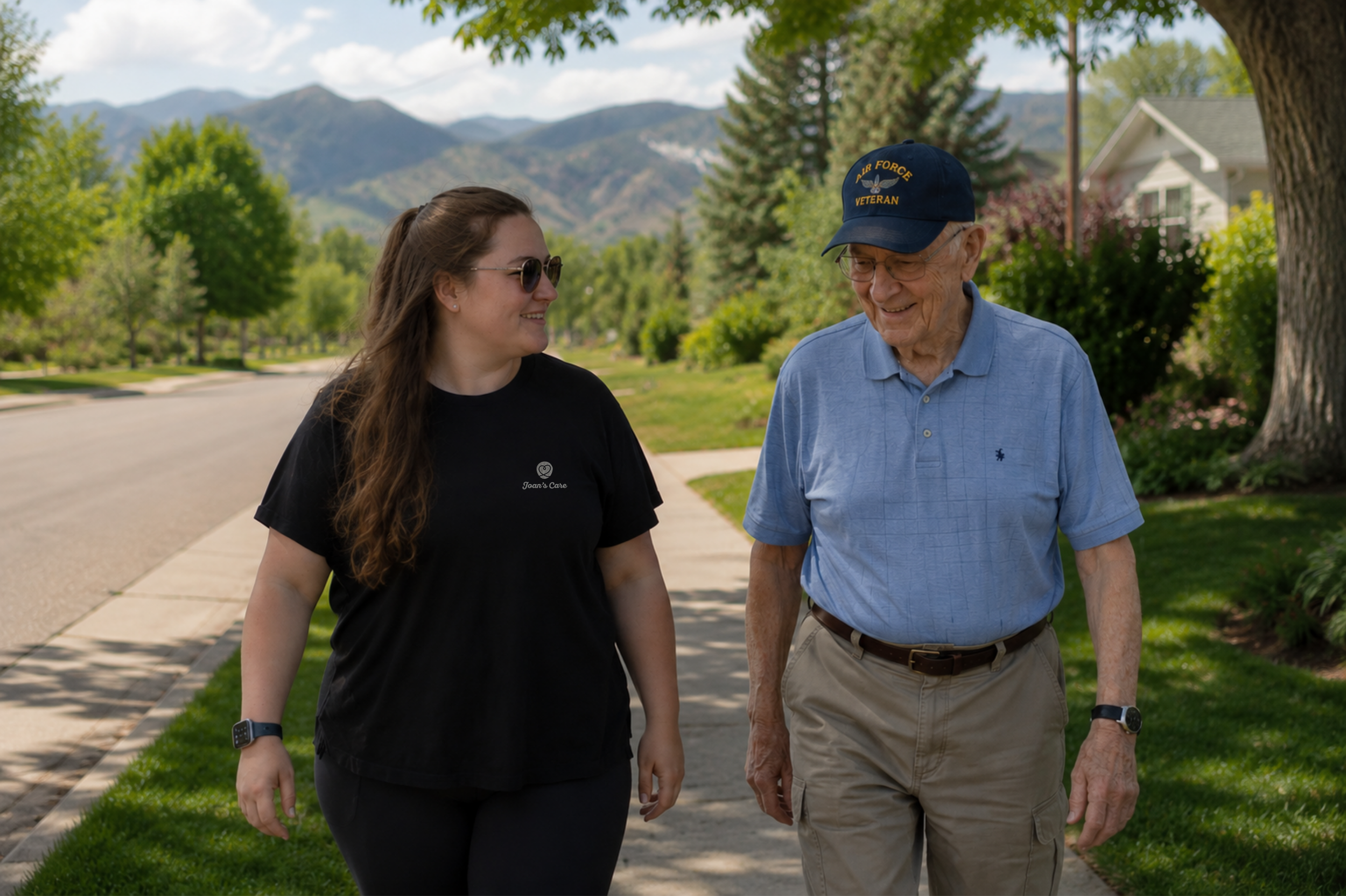
We can accompany on walks, outings, pool visits, etc. to encourage mobility, fresh air and meaningful social connection.


How it Works
Getting started doesn't require paperwork, insurance approvals, or a medical referral. It starts with a conversation.
Step one is a free phone consultation — twenty minutes to understand what's going on, what you've been worried about, and what kind of support would actually help. There is no pressure and no obligation. Most families tell us that call alone was worth making.
Step two is an in-home assessment, where we meet your parent in her own space, learn how she lives, what she values, what makes her comfortable, and what she'd rather not deal with. We listen more than we talk.
Step three is a care plan proposal — a specific, realistic plan built around her life, not a default service package. We go over it together and make adjustments until it feels right.
Step four is simple: we get started!
Simple. Human. On your terms.
Cost & Value
Let’s talk about cost (honestly).
We know that cost is one of the first things families think about and one of the last things they ask about. So we're going to name it.
Non-medical companion care in Colorado typically ranges from $40 to $75 per hour, depending on frequency, service type, and schedule. We usually charge $45 to $55 per hour depending on services and travel distance. Medicare does not usually cover companion care, so this is predominantly a private-pay service. Medicaid can sometimes cover non-medical in-home services like these, and we are happy to work with clients who have coverage. We offer flexible scheduling, from a few hours a week to daily visits, so families can start with what makes sense and adjust as needs change.
Here's the comparison we'd ask you to hold: the average cost of a fall requiring hospitalization among older adults is over $35,000. The average monthly cost of assisted living in the Denver Metro area runs between $5,000 and $8,000. A few hours of companion care each week — at a fraction of either of those costs — is often what prevents the event that makes the more expensive intervention necessary.
We understand that we are not the right fit for every family's budget. But we have never had a family tell us, after starting services, that it wasn't worth it.

Finding the Right Time
You're probably asking yourself, “is it too soon to call?”
The answer, almost always, is no.
The families who call us earliest (before a crisis, before a fall, before things get hard) consistently have the best outcomes. Their parent gets to meet their companion before they desperately need one. They get to choose from a position of calm rather than panic. They get to start the relationship while their parent still has the energy and openness to enjoy it.
The families who wait (who tell themselves it's not time yet, who delay because things are still mostly fine) call us after something has happened. And we can still help. But the window when everything is easier, more gradual, and more on everyone's terms has closed.
If something is making you wonder whether it's time, it's time to at least have a conversation. That's all we're asking.